
Have you ever noticed how silent moments can become the noisiest when your mind is buzzing with worry? For most seniors, anxiety might not be loud or dramatic; it could be a gentle hum in the background of daily life. Retirement, health problems, death of friends or a spouse, or simply the shift in routines can make older adults feel more insecure or anxious than than they have ever been before. It does not have to be that way or remain like that if it’s started.
Mindfulness practices are gentle, proven ways to stay stable and calm, no matter your age. The best part is it doesn’t require special equipment or years of practice. You just need to be willing to pause and observe the here and now.
What Exactly is Mindfulness? Why Would It Be So Helpful?
Mindfulness is the act of being attentive to what’s going on around and inside you, without judgment. It’s when you decide to breathe deeply, observe what’s around you, and become sensitive to your thoughts and emotions instead of allowing them to take control of you.
In older adults, mindfulness practices have also been shown to improve sleep, reduce anxiety, and even lower blood pressure. In a 2020 study published in The Journal of Geriatric Psychiatry, daily mindfulness practices lowered anxiety and stress levels in adults over age 60.
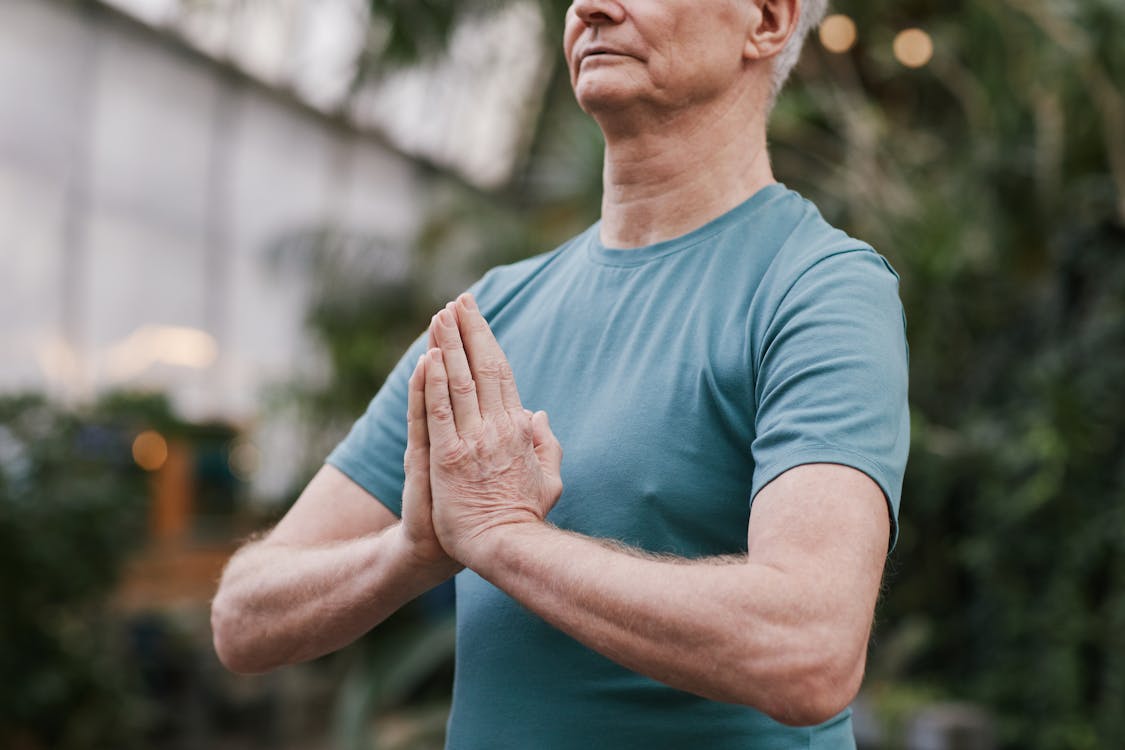
5 Simple Mindfulness Practices You Can Try Today
Here are some easy techniques that older people can try:
- Breathing Meditation
Sit comfortably, in a quiet place, and focus on your breath. Breathe in slowly through your nose, and out through your mouth. Count to 4 on each inhale and exhale. Start with just 3 minutes a day.
2. Mindful Walking
As you walk, even in the house or garden, notice how your feet feel as they touch the ground. Listen to the sounds around you, feel the breeze, or observe the colours in nature.
3. Gratitude Journaling
Write down three things that you are grateful for each day. This could be your morning tea, a phone call from a friend, or the warmth of the sun.
4. The 5-4-3-2-1 Grounding Exercise
When anxiety strikes, do this:
- 5 things you can see
- 4 things you can feel
- 3 things you can hear
- 2 things you can smell
- 1 thing you can taste
This pulls your mind away from worry and into the present.
5. Guided Meditations
Apps like Insight Timer, Calm, or Headspace offer short, senior-friendly short meditations with voices that can calm your nerves and give gentle instructions. You can ask anyone to help you install any of these apps on your phone for your use.

Overcoming the Barriers: “I’m Too Old for This” and Other Myths
Most older people are not sure about doing something new, especially mindfulness. You might think:
- “I can’t sit still.” – Try walking meditation instead.
- “I forget what I’m supposed to do.” – Use a sticky note reminder or a simple audio guide.
- “This isn’t for me.” – Just try it once. You might be amazed at how relaxed you’ll feel afterward.
Mindfulness does not mean that you would have an empty mind, but that you become kind to yourself and stay curious about the world.
How Loved Ones and Caregivers Can Help
Mindfulness does not have to be a solo activity. Family members and caregivers can help by:
- Practicing with seniors as a regular part of their daily routines (e.g., taking a few breaths together before bedtime).
- Gently reminding them to try to meditate or journal.
- Sharing audio or video meditations specifically created for older adults.
Sometimes, just being present with someone in a mindful way can also calm anxiety along with loneliness. You can put down your phone and just listen to them talk.

Peace is Possible at Any Age
Anxiety may feel like an unwanted guest in your later years, but it does not need to stick around. When you take a few minutes to practice mindfulness each day, you can learn to slow your mind, calm your thoughts, and enjoy each moment more fully.
So, why not begin today? Take a deep breath. Observe your surroundings. Notice what is before you. That, right there, is a mindful moment and it’s yours.

One Response