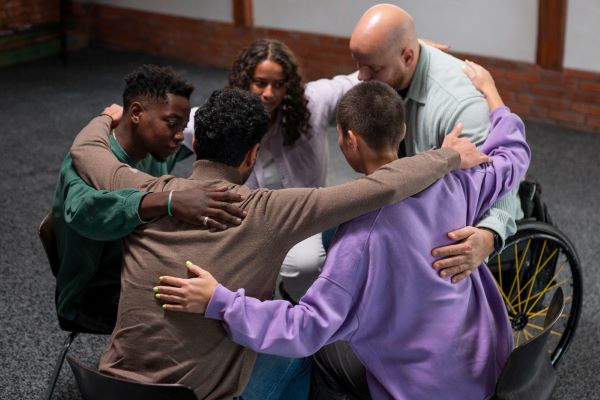
This year on World Mental Health Day (October 10), communities across the UK responded to awareness and made active changes. In Rochdale, Rochdale and District Mind worked in partnership with the local council to host an open event. There, they offered mental health check-ins, resource packs, and conversations that reminded people it’s okay to ask for help.
Meanwhile, in Cambridgeshire and Peterborough, CPSL Mind held “Good Life Service” meetings that brought together neighbors, volunteers, and healthcare partners to talk about emotional wellbeing. These were not events on a grand scale. They were small, intimate and inclusive which turned to be very impactful. They reflected the way community support for mental health care can start with simple acts of kindness that ripple out, changing the way people think about mental wellbeing in everyday life.
Why Community Support is Important to Everyone’s Mental Health
We like to think of mental health as something deeply personal, and it is. But it’s also very social. When you have a supportive community, a lot get accomplished. You would not have to struggle with certain things in secret and you gain the courage to seek help.
The World Health Organization emphasizes that being in a good social circle is one of the biggest protective factors against depression and anxiety. When people feel bound together with family, friends, neighbors, or local organizations, they worry less, enjoy better self-esteem, and are more resilient.
That’s where community support for mental health comes in. It facilitates easier open conversation, replaces stigma with empathy, and reminds us that no one’s journey has to be a solitary one.

How Communities can Support Mental Health Actively
The following are simple, effective ways communities can create secure, supportive environments for mental wellbeing:
- Start Open Conversations
Mental health subjects should not only come up during awareness days. Communities thrive when people are not afraid to talk about stress, anxiety, or grief without judgment. Just talking as you take a cup of tea with your neighbor can bring healing your way.
- Build Inclusive Spaces
Faith groups, schools, and workplaces can all be champions of mental health. When these groups engage in listening circles, peer-support sessions, or wellness workshops, it gives an individual a place to be heard.
- Make Resources Accessible
Many people do not know where to turn to assistance. Local libraries, community centers, and social media pages can list helplines and counseling services. These visibilities will make a gigantic difference in the community.
- Volunteer or Get Involved
Even if you are not a mental health worker, your presence is also valid. You can work as a volunteer at community events, participate in awareness walks, or organize neighborhood check-ins. By doing any of these, you are contributing to a culture of care.
The Ripple Effect of Compassion
When someone chooses to listen, others feel safer to speak.
When a community steps up to organize an event, others are encouraged to do the same.
That’s how change begins. It happens with one act of compassion that multiplies.
Communities where mental health comes first report having less stigma, stronger social trust, and more people seeking help early. It’s proof that healing thrives where kindness is sown.
You don’t have to repair someone’s life to make a difference. Sometimes, your presence is what is needed.

How You Can Help
Change does not always come from big programs. It starts with individuals who care.
- Visit a neighbor who has been quiet recently.
- Share mental health materials on social media.
- Encourage local leaders to provide wellness sessions.
- Offer to share your own experiences. Your story might be the one that will help others find their voice and tell their stories.
When each of us does a little, our communities become places where mental wellness is not an afterthought. It becomes a shared value.
The events that occurred in this year’s World Mental Health Day prove to us that awareness is only the beginning. Actions happen in our homes, schools, workplaces, and local streets where empathy leaves.
Together, we truly heal. Every conversation, act of kindness, shared moment of understanding makes us a stronger, healthier, community for all of us.
