
In the previous article, we discussed practical steps to deal with and overcome loneliness. Perhaps you have tried admitting how you feel, journaling your thoughts, reaching out to someone, creating a simple routine, or being intentional about the spaces you engage in. These are all meaningful steps, but the changes don’t always reflect immediately.
Loneliness does not disappear just because you took one healthy action. Sometimes it lingers a little longer and softens very slowly. Sometimes it feels the same for a while before you begin to notice small changes. That does not mean the actions you are taking are failing. It may simply mean that your healing process is taking time.
This is where learning to sit with loneliness becomes important. Sitting with loneliness does not replace the practical steps given. It works side by side with the solutions. It gives you the opportunity to exercise patience to see the gradual changes that are occurring. It allows you to see progress without rushing it and it teaches you that growth is not always loud.
Why We Struggle to Sit with Loneliness
Many people do not like to be uncomfortable, and loneliness brings a certain level of discomfort. Once we discover that loneliness is the problem, we begin to seek quick fixes. We choose to distract ourselves, overcommit to social activities, scroll endlessly on our phones. We try to prove to ourselves and others around that we are not lonely.
These responses are understandable. However, when we constantly escape the feeling, we never fully understand it. Loneliness then becomes something frightening that we need to escape from very fast. When it should actually be informative, helping us acknowledge our feelings without panic or self-criticism.

What It Means to Sit with Loneliness
- It does not mean that you isolate yourself further.
- It does not mean that you resign to permanent sadness.
- It does not mean that you reject the practical steps you are already taking
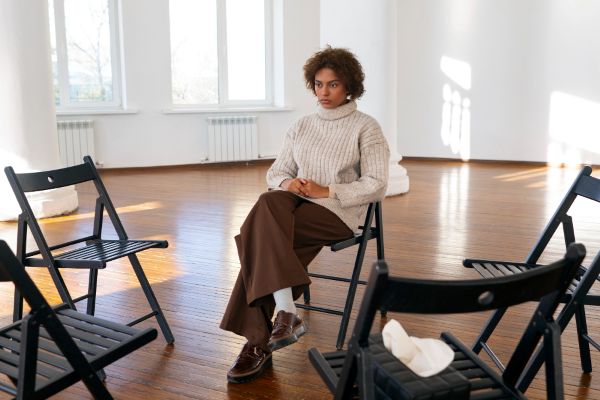
Sitting with loneliness means that you give yourself space to say, “This is how I feel right now,” without immediately trying to silence it. When you sit with your lonesome feeling, you begin to observe it rather than fight it.
You may start to notice some patterns. Does it disappear at night? After certain conversations? During transitions? When you are aware of these patterns, you’re able to understand it better and address it properly.
A Practical Example
Let’s say you have reached out to a friend and the conversation helped you, but later that evening the loneliness returns. Instead of telling yourself that nothing is working, you pause. You sit quietly for a few minutes, take a deep breath, and name what you are feeling. “I still feel lonely, and that is okay.” You may write a few lines in your journal about what you wish felt different. You allow that emotion to rise and settle without judging yourself for it.
The next day, you follow your routine again. You go to work, send another message to your friend, connect with new people you meet. You continue to show up for your life.
Over time, you begin to notice that the intensity changes. The loneliness may still visit you sometimes, but it does not overwhelm you in the same way. This is gradual growth. Sitting with the feeling helped you recognize that healing was happening, even when it was not dramatic.
Learning Patience through the Process
Loneliness often teaches us to be patient with ourselves. It reveals how quickly we expect our emotions to change especially when they are not so nice ones. However, some meaningful changes in our emotions are not always immediate. Some of them are subtle. Some are internal before they become visible externally.
So, give yourself the permission to grow at a realistic pace. Practice gratitude for small improvements in your life. Be grateful for the lighter mood, the more honest conversation you had with your friend, and the great day you experienced that brought relief. These little changes are all important.
The Spiritual Dimension of Sitting with Loneliness
For many people, sitting with loneliness can also be a spiritual practice. It may look like quiet prayer, meditation, or simply being still in the presence of God.
In those moments, you feel reassured that you are not completely alone, even when you are not connected to a human being. This sense of being seen or held can bring calmness to an otherwise restless feeling.
Also, note that spiritual loneliness might not erase the loneliness completely. However, it softens its edges and strengthen your resilience.
When Sitting Becomes Strength
Over time, sitting with loneliness builds your emotional endurance. You learn that you can experience discomfort without being defined by it. You realize that feelings are just temporary. No matter how intense they can be, they change.
Loneliness becomes something you move through, not something that labels you. So, you continue to take practical steps while you are patient with yourself. Soon, you’ll see those gradual and meaningful changes.
Conclusion
Healing from loneliness is rarely instant. You may be doing the right things and still feel the weight of it. That does not mean you are failing. It may simply mean you are in the middle of the process.
Sitting with loneliness teaches you to trust gradual growth. It helps you see progress with gratitude rather than frustration. Remember, you are more than this season. Loneliness is only a visitor; it does not get to define who you are becoming.
