This article discusses suicide and emotional distress as it’s World Suicide Prevention Day. If this subject is difficult for you, please take care while reading and consider reaching out for support if needed. Helplines are in the last paragraphs of this article.
The story I’m about to share comes from a television series. I’ve changed the doctor’s name to Dr. Luis and I’m focusing on the emotional lesson here. Dr. Luis, a resident doctor, was left alone to perform a surgery on a little girl. At some point, he became overwhelmed and made a mistake. He tried rectifying the problem, but the child was losing blood fast. Quickly, he reached out for help from the surgeon who had left him to it, but she was too busy saving another person’s life. Eventually, the child died and this affected him badly.
Unfortunately for him, the child’s elder brother, who was a teenager, was the one who gave permission for the surgery. The child’s mother was nowhere to be found, and because the surgery was urgent, her teenage son forged her signature to give the doctors permission to proceed. This act complicated the matter and the doctor went through serious scrutiny. The incident left Dr. Luis deeply depressed. He began to convince himself that he was no longer fit to be a doctor. He was certain that the pressure from his parents and sister was the reason he had chosen medicine in the first place.
His sister and other resident doctors did their best to convince him that one mistake did not make him a bad doctor. They made him understand that mistakes happen, even in a profession where the stakes are incredibly high. That doesn’t mean a good doctor should give up on saving lives. When Dr. Luis returned to work, he saved a patient’s life and received praise from his colleagues. This made him proud and confident in his abilities once again.
Few minutes later, the mother of the child that died and her teenage son came to meet him. The mother accused him of being a horrible doctor and killing her beautiful daughter. The encounter devastated him. Already struggling with the guilt, the criticism pushed him deeper into despair, and he died by suicide.

Well, you might want to blame his parents, sister, colleagues, and even the dead child’s mother for his demise. In the end, they weren’t the ones that died. They were the ones left behind to deal with the grief, guilt, confusion, and unanswered questions that he left behind. They might begin to wonder whether they missed the signs, if they could have done something differently, or whether something they said or did contributed to his decision.
Perhaps the most painful part of the story is that Dr. Luis had seemed to recover. His sister and colleagues had helped him regain some confidence, and returning to work gave him the opportunity to see himself as a capable doctor. But feeling better for a moment is not the same as recovering from what caused the pain in the first place. When the child’s mother confronted him, the guilt, grief and self-doubt he had been struggling with could have resurfaced.
This is why suicide can leave those left behind with so many difficult questions. They may replay conversations, remember moments when the person seemed fine and wonder if they should have recognized something they did not see. There may never be simple answers to these questions, but one thing remains clear: suicide does not erase the pain. It leaves another kind of pain for those who survive the loss.
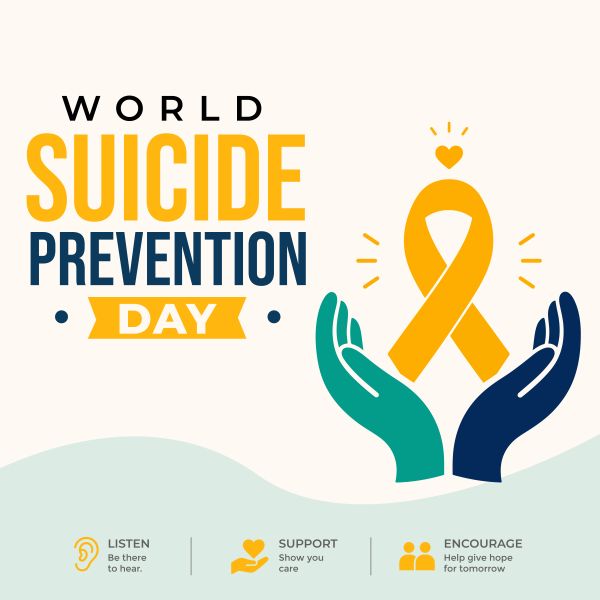
The World Suicide Prevention Day, observed every September 10, reminds us that people in deep distress need support, connection, and access to help before a temporary crisis becomes a permanent loss. Even if you cannot see a way forward at the moment, that does not mean one does not exist. People are out there who can be kind to your situation and help you in ways you might never imagine. Your life is connected to so many others, and the difficulties you might be going through at the moment could be the saving grace for another in the future. So, don’t make a permanent decision in the middle of a painful moment.

If You Are Struggling Right Now
- Give yourself time: Take breaks from what is stressing you out. You can enjoy nature, take deep breaths, listen to uplifting music, sermons, or inspirational talks.
- Tell someone what you’re experiencing: Speak to a trusted friend, family member, colleague, teacher or religious leader that can help you lighten your burden.
- Speak to a mental-health professional: A psychologist, psychiatrist, counsellor or doctor can help you work through overwhelming thoughts.
- Don’t stay alone if you feel unsafe: Move to a place where other people are present.
- Put some distance between yourself and anything you could use to hurt yourself.
- Seek immediate help if you think you might hurt yourself.
The life you are living today is not necessarily the life you will have tomorrow. You are more than your worst mistake, your most painful season, or the circumstances you are facing right now. Give yourself the opportunity to see what comes next. Things will change when you keep moving forward instead of putting a stop to your life. You are a unique human being and you deserve to live a unique life that would inspire others.
If you are struggling with suicide or think you may hurt yourself, please don’t face the moment alone. Contact your local emergency service or go to the nearest emergency department. If possible, stay with someone you trust while you get help.
- United States: Call or text 988 to reach the 988 Suicide & Crisis Lifeline. The service is free, confidential and available 24/7.
- Canada: Call or text 9-8-8 for the Suicide Crisis Helpline, available 24/7. If there is immediate danger, call 9-1-1.
- United Kingdom: Call NHS 111 and select option 2 for urgent mental-health support. The service is available 24/7. If there is an immediate risk to life, call 999 or go to A&E.
- Australia: Call Lifeline on 13 11 14 for free, confidential support, available 24/7. You can also text 0477 13 11 14 or use Lifeline’s online chat. If life is in immediate danger, call 000.
- Nigeria: Asido Foundation Helpline: +234 902 808 0416
- Elsewhere: If you reside outside these countries, use your local emergency service or find a crisis helpline available in your country.
